HVAC emergency in Chicago? Call Bernie's Heating & A/C Service now! Same-day service available for all heating and cooling emergencies.
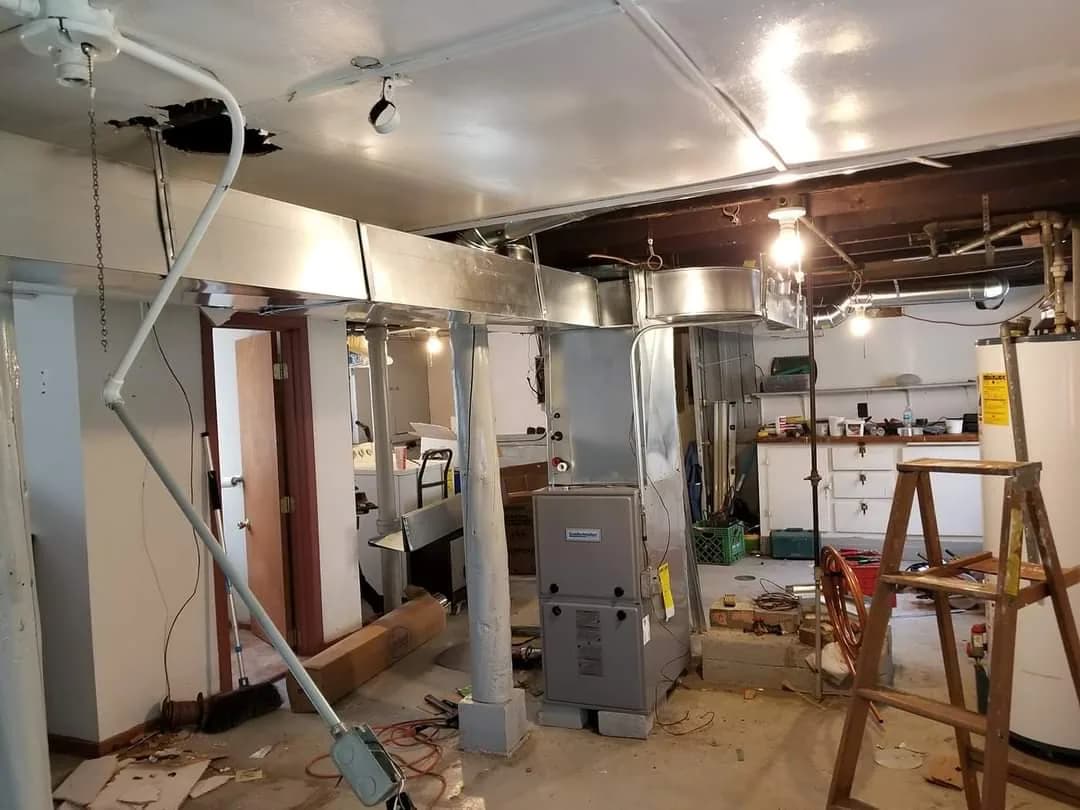
Bungalow furnace problems are often part equipment, part airflow, and part basement layout. We repair the furnace and check the conditions that made it fail.
Chicago bungalows were built before modern forced-air expectations. Many have ductwork that was resized, patched, or rerouted as basements were finished.
That affects repair decisions. A dirty flame sensor may be the immediate no-heat cause, but short cycling may come from return-air limit's or a blower fighting old ductwork.
If a furnace in a bungalow keeps tripping limits, do not just replace the limit switch. Find out why the cabinet is overheating.
Common no-heat repairs in basement furnaces.
Old ducts, blocked returns, dirty blower wheels, and tight filter slots cause overheating.
Weak airflow is common when older motors and capacitors start failing.
Inspection required
Older equipment needs careful combustion and carbon monoxide checks.
Many simple restrictions are visible before a tech arrives.
Move storage away from the furnace and returns.
Replace the filter.
Open basement and first-floor registers.
Write down whether the furnace short cycles or blows cold air.
Bernie's is based at 3704 N Cicero, right in bungalow territory. We see tight mechanical rooms, low basement ceilings, and old duct trunks every week.
That local experience matters when choosing between a small repair, airflow correction, or replacement.
If this page is close but not exactly your problem, these pages may match what you are seeing.
Common causes include dirty flame sensors, overheating from poor airflow, oversized equipment, dirty blower wheels, and blocked returns.
We can diagnose the HVAC equipment and airflow symptoms. If the ducts need repair, sealing, or replacement, ask us for a trusted specialist referral.
Yes, if the repair is safe and makes financial sense. We do not condemn equipment just because it is old.
Bernie's checks ignition, airflow, safety, and duct conditions before recommending repair or replacement.