HVAC emergency in Chicago? Call Bernie's Heating & A/C Service now! Same-day service available for all heating and cooling emergencies.
Steam heat should hiss a little and heat steadily. Loud banging usually means water is trapped where steam needs to move. We check pressure, pitch, vents, returns, and near-boiler piping.
Water hammer happens when steam pushes trapped water through the piping. The noise can be sharp, loud, and hard on fittings.
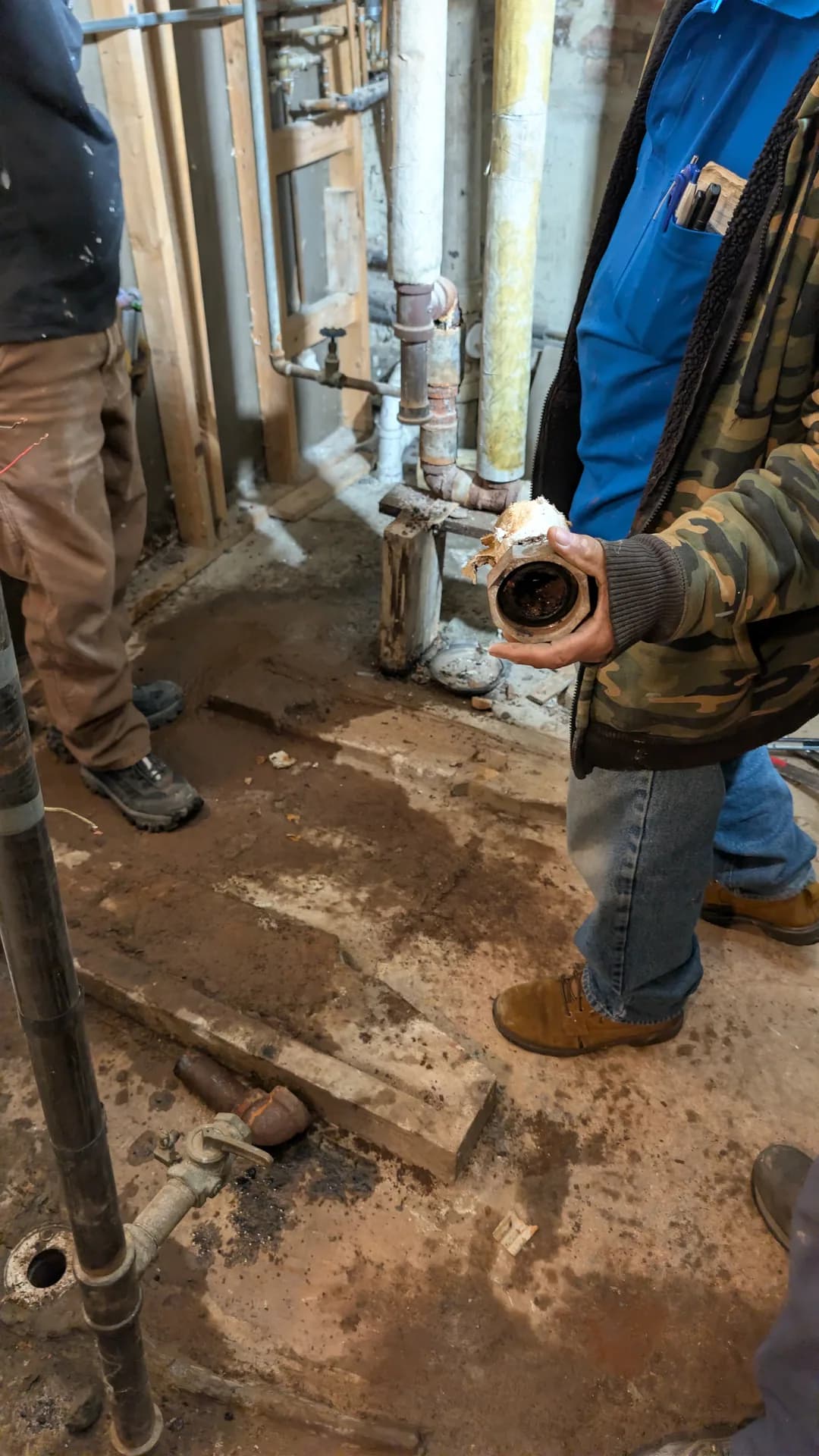
The cause is often not the boiler itself. It may be bad pipe pitch, clogged wet returns, high pressure, failed vents, or near-boiler piping that was never installed correctly.
Turning pressure up almost never fixes water hammer. Steam systems usually want low pressure and clear paths for condensate to return.
Air must leave before steam can fill the system evenly.
Scope-dependent
Sagging pipes trap condensate and bang when steam hits the water.
Pressuretrol settings, clogged pigtails, or control issues can push steam too hard.
Inspection required
Incorrect header, equalizer, or Hartford Loop piping can send wet steam into the mains.
Do not adjust boiler controls unless you know the system. Notes about when and where the banging happens help diagnosis.
Write down which radiators bang and when.
Check whether the boiler pressure gauge climbs high.
Look for leaking radiator vents.
Make sure radiator valves are fully open, not half closed.
Many bungalows and two-flats still use steam piping that has been altered for a century. A new boiler tied into bad old piping can still bang.
We look at the whole steam path: boiler waterline, header, equalizer, mains, vents, risers, radiators, and returns.
If this page is close but not exactly your problem, these pages may match what you are seeing.
It can damage vents, fittings, and piping. It also points to a system problem that should be corrected before it gets worse.
Sometimes, but not always. Venting helps air leave, while pipe pitch and wet returns control condensate.
No. Most residential steam systems run best at low pressure. High pressure can make noise and balancing problems worse.
Bernie's checks pressure, pitch, vents, returns, and near-boiler piping in Chicago steam systems.