Real Chicago HVAC Work
Commercial rooftop equipment we service
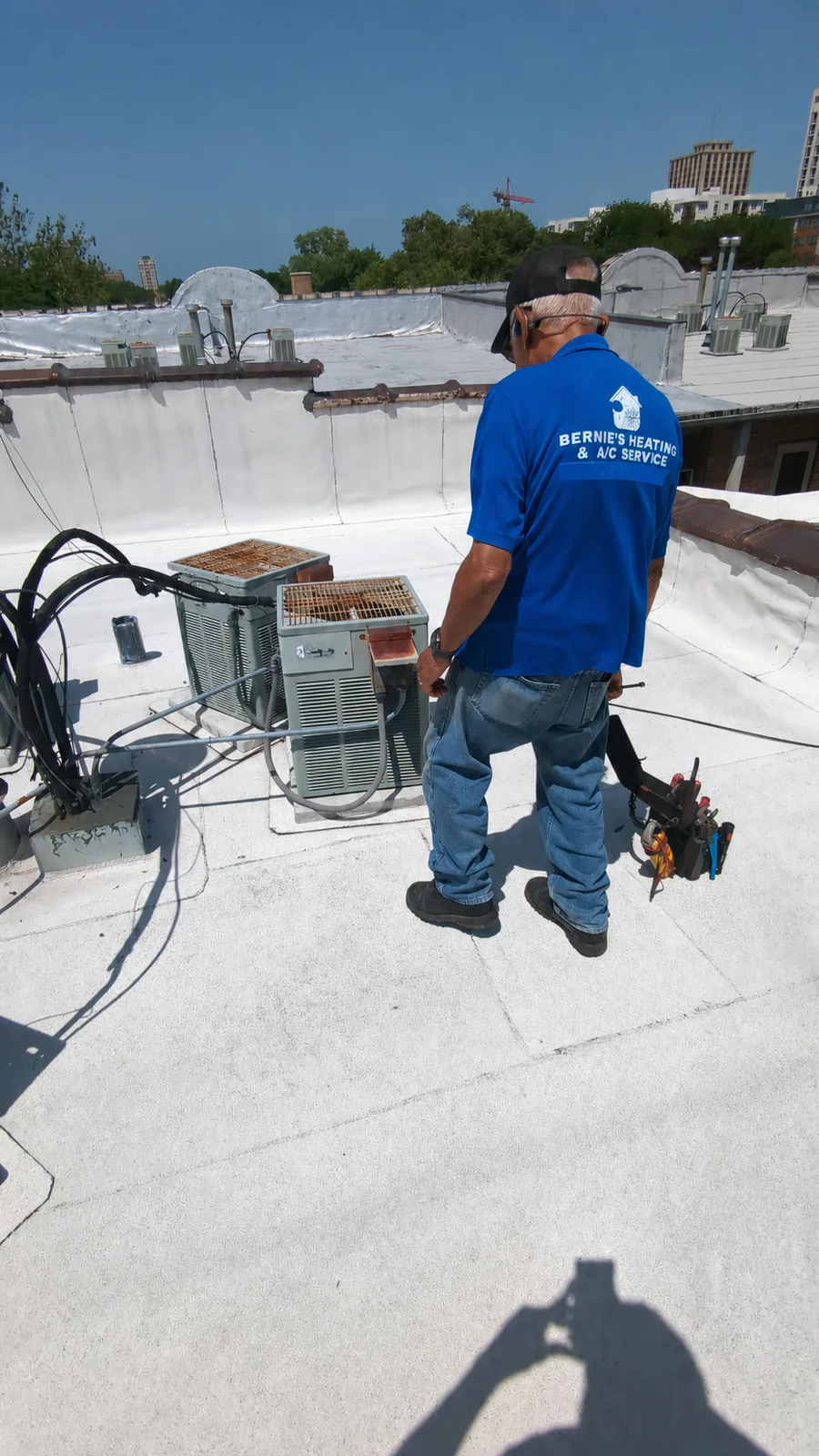
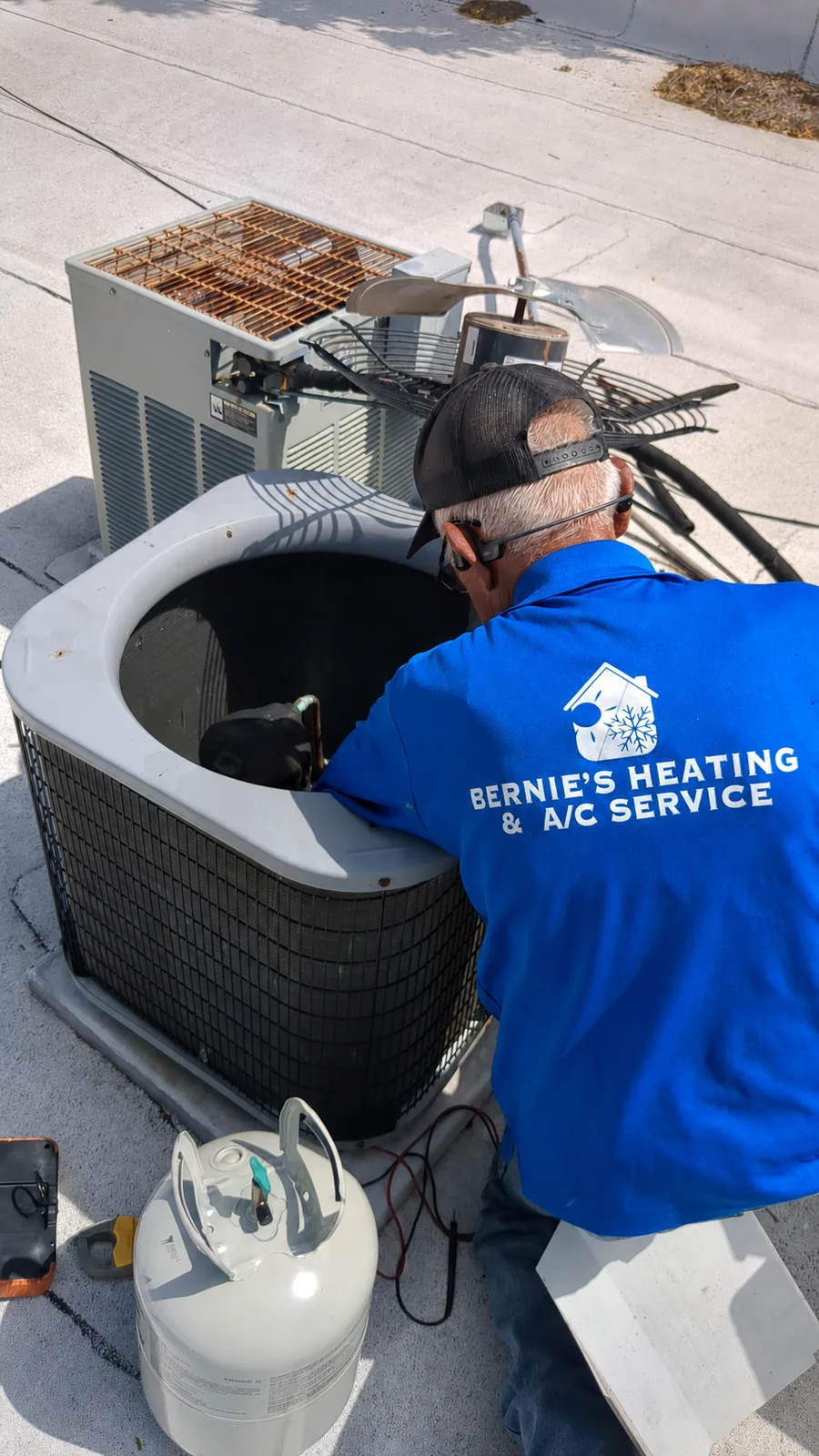
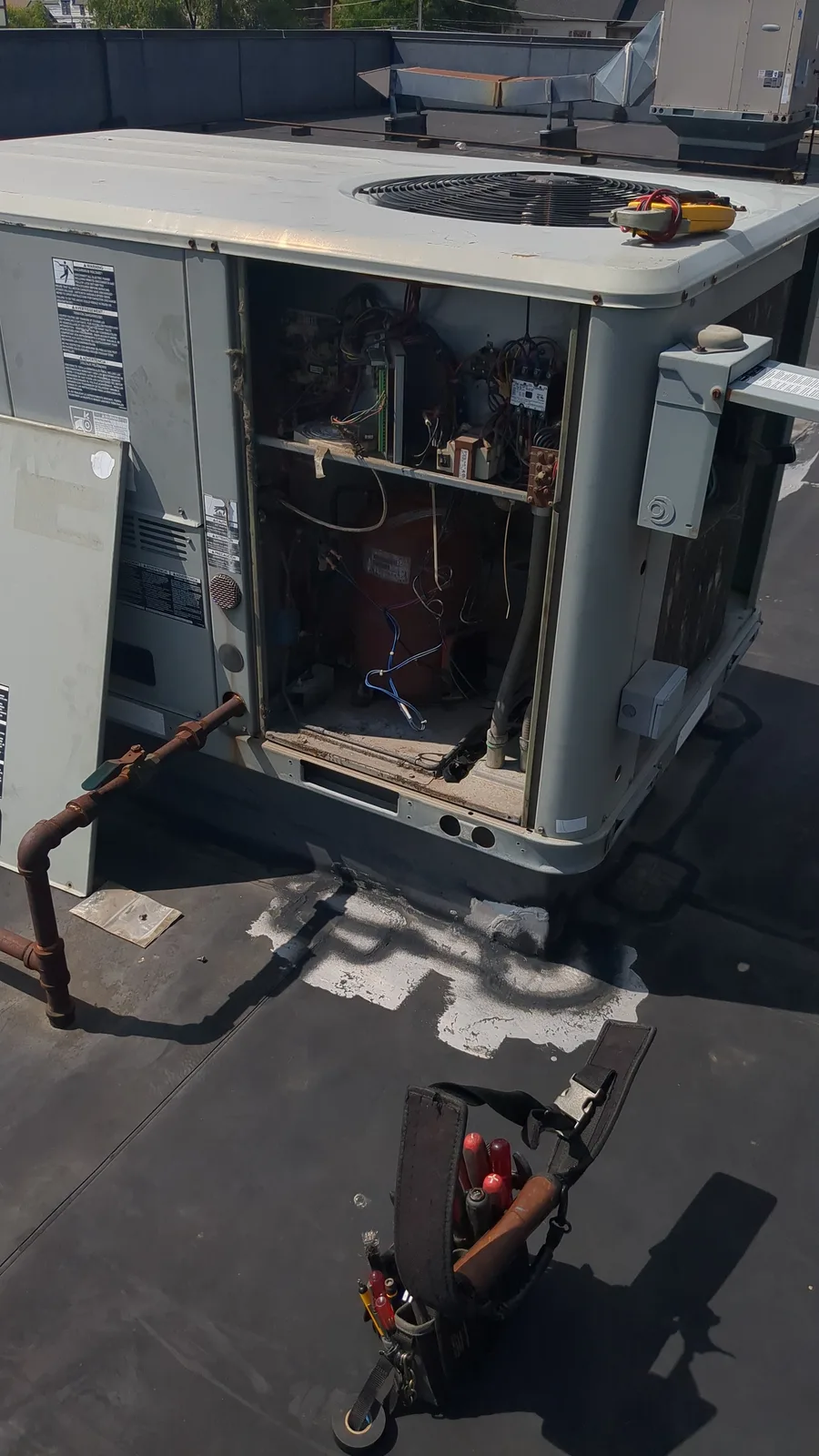
These are photos from Bernie's field work—not stock photography. We inspect and service rooftop condensers and packaged HVAC equipment throughout the Chicago area.
Call (773) 900-6248 to confirm current emergency service availability in your area and estimated technician arrival time.
We diagnose the equipment first, explain the repair, and provide a written estimate before work begins.
HVAC downtime can disrupt service and revenue at Chicago restaurants and retail stores. Call to discuss your commercial HVAC needs and current availability.
Real Chicago HVAC Work
These are photos from Bernie's field work—not stock photography. We inspect and service rooftop condensers and packaged HVAC equipment throughout the Chicago area.
Restaurant and retail HVAC isn't just "bigger residential." The demands, stakes, and requirements are completely different. A lot of residential companies don't understand this.
Residential: 24/7 occupancy, lighter daily use
Commercial: Restaurants/retail run 12-16 hours/day at maximum load. Different wear patterns, extended equipment stress.
Result: Commercial equipment wears faster and needs more frequent maintenance
Residential: 4-6 people in a home
Commercial: 50-200 people in a restaurant or retail store. Massive heat load from body heat, constant door opening (air infiltration), humidity control challenges.
Result: Commercial systems need higher capacity and better ventilation
Residential: Discomfort, inconvenience
Commercial: significant daily revenue at risk. July dinner rush without AC = customers leave. Holiday shopping without heat = closed doors.
Result: Emergency service is about protecting revenue, not just comfort
Residential: Basic safety standards
Commercial: Chicago health code (restaurants need makeup air, grease exhaust), ventilation rates (15 CFM/person dining, 100+ air changes/hour kitchen), fire code (grease duct cleaning every 3-6 months).
Result: Permits, inspections, and compliance documentation required
Restaurants have the most complex commercial HVAC needs - kitchen heat loads, grease exhaust, makeup air, and Chicago health code compliance. We see these challenges every week from Lincoln Park to Pilsen to the Loop.
Grease Exhaust Hoods:
Chicago code requires Type I hoods for cooking (grease-producing). Must exhaust outside, include fire suppression, and get cleaned every 3-6 months (fire code).
Makeup Air Units:
Replace exhausted kitchen air to prevent negative pressure. Without makeup air, dining room doors get hard to open, draft issues, and HVAC struggles to maintain temperature.
Kitchen Heat Load:
Commercial ranges produce 50,000-100,000 BTU of heat. That's like adding 4-8 furnaces running full blast during dinner service. AC systems must handle this load plus dining room cooling.
Grease Buildup:
Grease vapor coats HVAC equipment (rooftop units, ductwork). Requires quarterly cleaning beyond standard maintenance to prevent fires and equipment failure.
River North Restaurants:
High-rise buildings, rooftop units 10+ stories up, limited access, crane requirements for replacements. Premium image means AC failure is unacceptable during dinner service.
Lincoln Park Storefronts:
Old buildings (1900s-1920s), ductwork retrofits challenging, tight mechanical rooms, historical building restrictions. Creative solutions needed.
Loop Downtown:
Multi-tenant buildings, shared HVAC systems, coordination with property management, building engineers. Permits and scheduling headaches.
Pilsen/Bridgeport:
Standalone buildings, easier rooftop access, older equipment common. Good candidates for full system upgrades vs patching old units.
Chicago Department of Public Health inspections: Restaurants get surprise visits. HVAC failures (inadequate ventilation, improper exhaust) can result in citations or closure.
Required ventilation rates: Dining areas need 15 CFM per person. Kitchens need 100+ air changes per hour. We calculate and document compliance.
Grease duct cleaning: Fire code requires every 3-6 months depending on cooking volume. We don't do the cleaning but coordinate timing with your duct cleaners.
Retail stores have different challenges than restaurants—high foot traffic, variable occupancy, extended hours, and customer comfort drives sales.
Magnificent Mile:
High-rise retail, premium image (AC failure = lost sales + angry high-end customers). Fast response critical during Michigan Avenue shopping season.
Wicker Park/Bucktown Boutiques:
Small spaces (500-2,000 sq ft), tight budgets, accessible rooftop units. Good for ductless mini-splits and small RTUs.
Neighborhood Strip Malls:
Standalone storefronts, accessible rooftop units, easier maintenance access. Most cost-effective for service and replacements.
Uncomfortable customers don't buy. Studies show retail sales drop 20-30% when stores are too hot or too cold. Your HVAC system protects revenue—we treat it that way.
From preventive maintenance to emergency repairs to full system replacements—we handle all commercial HVAC needs.
Monthly Plans
Small retail (under 2,000 sq ft)
Medium restaurant/retail (2,000-5,000 sq ft)
Large restaurant/retail (5,000+ sq ft)
What's Included:
Why businesses need it: Prevents downtime during peak hours (dinner rush, holiday shopping). The business impact of an AC failure can exceed the cost of preventive maintenance.
Estimated Arrival:
Call to confirm availability and estimated arrival time. Scheduling depends on location, technician availability, and parts needed.
After-Hours Pricing:
No after-hours markup. The diagnostic charge is confirmed when you book, and repairs receive a written estimate before work begins.
Common Emergencies:
Typical repair range: We quote before starting work—no surprise bills.
Rooftop Units (RTUs):
Most common for restaurants/retail. 3-20 ton capacity.
5-ton unit installed
10-ton unit installed
15-ton unit installed
Split Systems:
Small cafes, boutiques, offices.
Grease Exhaust Hoods:
Kitchen ventilation (Type I hoods for cooking).
Makeup Air Units:
Replace exhausted kitchen air.
"We'll tell you if repair makes sense vs replace. A 15-year-old rooftop unit with a failed compressor? We'll recommend replacement and explain why—you decide."
"No upselling commercial-grade equipment when residential-grade works."
"We work around your business hours—install during closed hours (nights, weekends, Mondays for restaurants) to avoid disrupting customers. No markup for after-hours installation."
River North restaurant. AC dies during July Saturday dinner rush (95° outside, 85° inside dining room). Customers leave, reservations canceled. An unexpected failure can drive away customers and require an urgent major repair.
Prevention: Quarterly Maintenance
May tune-up catches failing compressor (capacitor weak, amp draw high). Schedule the repair during a slower period to avoid disruption. Preventive maintenance can reduce the risk of lost revenue and emergency repair costs.
Commercial HVAC work requires permits and inspections. We handle the paperwork—you focus on running your business.
Most common for restaurants (5-20 tons). Self-contained heating/cooling, installed on roof. We service all major brands (Carrier, Trane, Lennox, York, Rheem).
Small cafes, coffee shops, fast casual. Outdoor condenser + indoor air handler. Good for spaces under 2,000 sq ft or supplemental cooling.
Type I (cooking/grease-producing) and Type II (non-cooking). Must exhaust outside, include fire suppression, cleaned every 3-6 months per Chicago fire code.
Replace exhausted kitchen air (prevents negative pressure, door issues, draft problems). Required by Chicago code for hood exhaust over 400 CFM.
We service HVAC-related issues (evaporator coils, condensers, airflow). Not refrigeration compressor specialists—we refer those to commercial refrigeration contractors.
Small restaurants, wine bars, private dining rooms. Quiet operation, zone control, no ductwork needed.
Small retail (under 2,000 sq ft). Medium restaurant/retail (2,000-5,000 sq ft). Large restaurant/retail (5,000+ sq ft). Plans include quarterly tune-ups, filter changes, priority emergency service, and 20% parts discount. We can customize a plan for your specific situation.
Yes. Monthly maintanance contracts prevent downtime during peak hours (dinner rush, holiday shopping). Plans include quarterly tune-ups, filter changes, refrigerant checks, belt replacments, control calibration, priority emergency service, and 20% parts discount.
Call to confirm availability and estimated arrival time. Scheduling depends on location, technician availability, and parts needed.
Yes. Rooftop units (RTUs) are the most common equipment for Chicago restaurants and retail. We service 3-20 ton units, handle emergency repairs, and install replacements.
Absolutely. We work around your business hours—install during closed hours (nights, weekends) to avoid disrupting customers. No markup for after-hours installation work.
Yes. We understand Chicago Department of Public Health requirements: Type I grease exhaust hoods for cooking, makeup air units, required ventilation rates (dining: 15 CFM/person, kitchen: 100+ air changes/hour), and grease duct cleaning schedules (every 3-6 months per fire code).
Commercial HVAC downtime can disrupt operations and revenue. Schedule maintenance or emergency service—we work around your business hours. We serve restaurants and retail stores throughout Chicago.
Call to confirm availability and estimated arrival time. Scheduling depends on location, technician availability, and parts needed.